
The 2027 Nissan Rogue Hybrid e-POWER Is Coming — Here's What Makes It Different
The 2027 Nissan Rogue Hybrid e-POWER Is Coming — Here's What Makes It Different
Posted on April 28, 2026
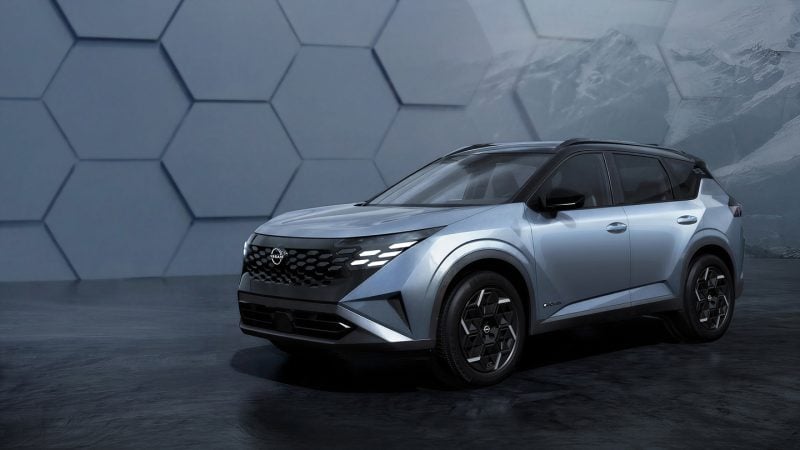
There are a lot of hybrid SUVs available to Ottawa drivers right now, and most of them follow the same basic formula. A gasoline engine does most of the work, an electric motor fills in at low speeds or gives a boost when needed, and the whole system shifts back and forth between the two as conditions change. The 2027 Nissan Rogue Hybrid e-POWER doesn't follow that formula at all.
Expected in Canada in late 2026, the all-new Rogue Hybrid e-POWER uses a fundamentally different approach to hybrid technology — one that Nissan calls e-POWER. The differences aren't just technical footnotes. They show up in how the vehicle drives, how it handles winter roads, and how drivers interact with it day to day. Here's what sets it apart.
The Engine Is Only There to Generate Power
In a standard hybrid, the gasoline engine plays a direct role in driving the wheels. In the 2027 Rogue Hybrid e-POWER, the gasoline engine is connected to a generator — not the drivetrain. It produces electricity, which charges a lithium-ion battery and powers two electric motors. Those motors are what actually move the vehicle.
This is called a series hybrid configuration, and it means the Rogue Hybrid e-POWER always drives like an electric vehicle. The response is immediate and linear — no gear changes, no hesitation, no transition between power sources. The gasoline engine's behaviour adjusts to meet demand: it runs less during slower city driving in Barrhaven or the Glebe, and more consistently during extended highway travel toward Kingston or Montreal.
The result is a quieter, smoother ride without requiring any changes to how drivers fuel the vehicle.
No Transmission — At All
Transmissions exist to match engine speed to wheel speed. Because the 2027 Rogue Hybrid e-POWER uses electric motors to drive the wheels directly, there's no need for a transmission. The connection between driver input and vehicle response is direct and immediate.
For everyday driving, this means the vehicle simply goes when you press the accelerator — smoothly, without any of the lurching or gear-hunting that shows up in some hybrid systems during acceleration or passing.
Every Version Comes With Dual-Motor AWD
There is no front-wheel-drive version of the 2027 Rogue Hybrid e-POWER. Every trim will include dual-motor all-wheel drive as standard equipment. One electric motor powers the front wheels; the other powers the rear. The system manages torque continuously across all four wheels, adjusting in real time based on road conditions, driver input, and vehicle dynamics.
This goes well beyond traditional on-demand AWD systems that react only when wheelspin is already happening. The 2027 Rogue Hybrid e-POWER's system anticipates and adjusts proactively.
| Capability | How It Works |
|---|---|
| Standard AWD | Dual-motor — every trim, no exceptions |
| Torque Distribution | Continuously adjusted front-to-rear and side-to-side |
| Low-Grip Response | System monitors wheel slip and fine-tunes torque and braking |
| Cornering Stability | Power redistributed across axles to maintain grip |
| Deceleration | Balanced regenerative braking from both motors reduces body pitch |
For Ottawa drivers who deal with icy Queensway on-ramps in January, slushy side streets in the Glebe, or packed snow on rural roads east of the city, all-wheels-engaged traction from the moment you move is a meaningful difference.
One-Pedal Driving Is Back
Nissan's e-Pedal feature returns on the 2027 Rogue Hybrid e-POWER. With e-Pedal active, lifting off the accelerator activates regenerative braking — strong enough to bring the vehicle to a complete stop in many situations without the driver touching the brake pedal. Once stopped, the hydraulic brake system holds the vehicle in place automatically.
This isn't a niche feature for EV enthusiasts. For anyone who spends time in stop-and-go traffic, it significantly reduces the physical and mental effort of city driving. Stop, start, slow down — all managed with one pedal.
You Never Plug It In
Despite driving like an EV, the 2027 Rogue Hybrid e-POWER requires no external charging. There is no charging port. No home charger to install. No route planning around fast-charging stations. Drivers fill it up with regular gasoline at any station, exactly as they would with any other vehicle on the road.
The gasoline engine keeps the battery charged through driving. In practical terms, the transition to this kind of hybrid requires no change in routine whatsoever — just a noticeably different experience behind the wheel.
Proven Technology in a New Setting
The e-POWER system is not new. Nissan introduced it on the Note in Japan in 2016. Since then, nearly two million vehicles with e-POWER technology have reached customers across 68 countries. The 2027 Rogue Hybrid e-POWER uses the third generation of this system, specifically engineered for how Canadians drive — highway distances, cold starts, seasonal conditions, and everything in between.
The technology is arriving in Canada with a decade of real-world refinement behind it.
At a Glance: How the 2027 Rogue Hybrid e-POWER Is Different
| Feature | 2027 Rogue Hybrid e-POWER |
|---|---|
| Hybrid Type | Series — gas engine is generator only |
| Wheel Drive | Dual-motor AWD, standard on all trims |
| Transmission | None |
| Charging Required | No — fill with regular gasoline |
| One-Pedal Driving | Yes — e-Pedal confirmed |
| Technology Maturity | Third-generation, ~2M vehicles globally |
| Expected Arrival | Late 2026 |
Find Out More at Hunt Club Nissan in Ottawa
The 2027 Nissan Rogue Hybrid e-POWER is arriving at Canadian dealerships in late 2026. At Hunt Club Nissan, the team is ready to answer your questions and help you understand how this vehicle fits your needs. Visit the showroom on Hunt Club Road to get the full picture — or ask to be added to the update list so you're the first to hear when trim details and pricing are announced.